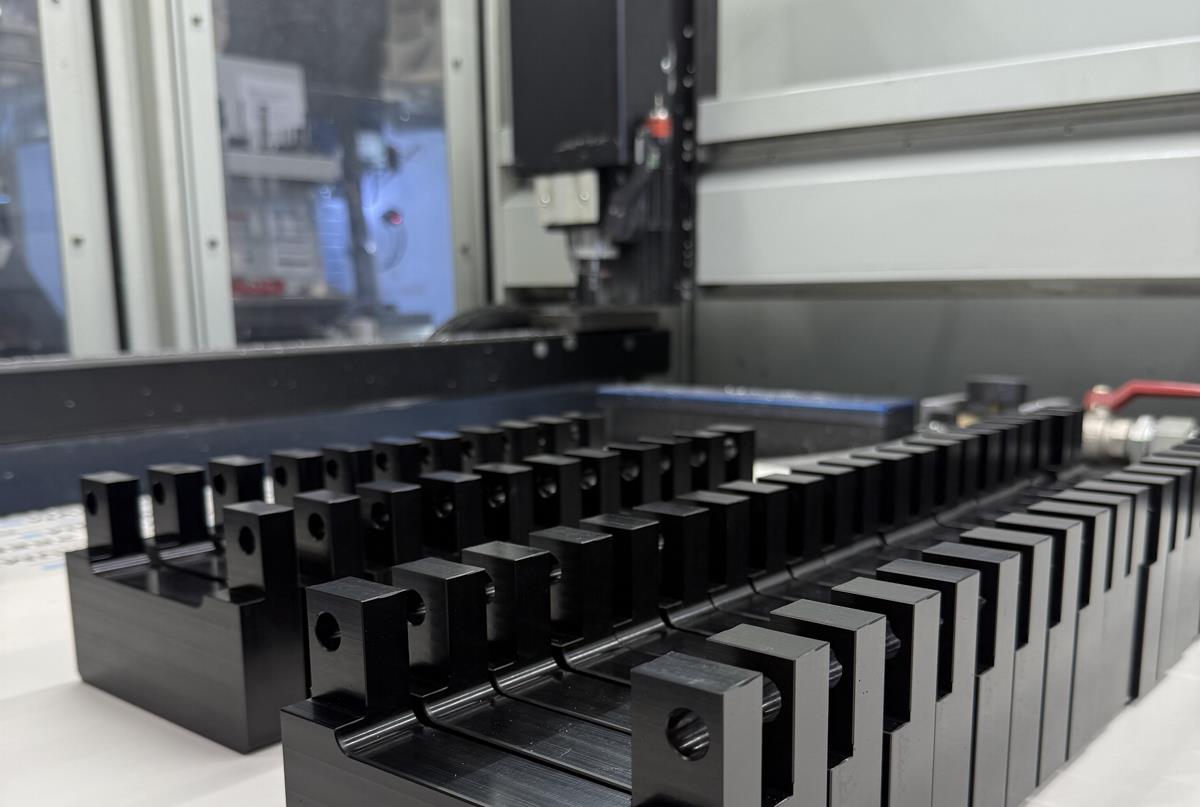
Manufacturing of Custom Plastic Parts: Possibilities and Machining Methods
Introduction
Due to their versatility, plastics have become one of the most important materials for modern industrial part manufacturing. Their low weight, corrosion resistance and machinability make them ideal for producing high-quality components tailored to specific requirements. When manufacturing custom plastic parts in small quantities, precision, design flexibility and the use of the right machining technologies are particularly important.
Metalworking companies, which have traditionally focused on machining metals, are increasingly turning their attention to the production of plastic components as well. Companies that offer comprehensive services, from component design through to manufacturing, have a significant advantage when it comes to meeting flexible production requirements.
What are the benefits of custom plastic part manufacturing?
Using plastics offers several advantages over metals across a wide range of industries:
Low weight: plastic components can significantly reduce the overall weight of a structure.
Corrosion resistance: they do not corrode, resulting in a longer service life even in humid or aggressive environments.
Cost-effectiveness: machining plastics is often faster and more energy-efficient than machining metals.
Excellent electrical insulation properties: many plastics are ideally suited for manufacturing components for electrical equipment.
These advantages are particularly evident when the appropriate machining processes
are used and the components are manufactured to the required level of precision and quality.
What technologies are used to manufacture custom plastic parts?
Companies specializing in small-batch production use the following machining technologies for manufacturing plastic components:
CNC turning – For the precision machining of cylindrical and more complex rotational components.
CNC milling – For three-, four- or five-axis machining of components with complex geometries, enabling the precise production of intricate shapes.
Laser cutting and engraving – For cutting and engraving fine details, such as instrument housings, electronic enclosures or custom markings.
Welding and assembly – Processes used to join and secure complex plastic components, such as plastic welding, enable durable and reliable assembly. Various welding techniques, such as extrusion welding and ultrasonic welding, ensure that components form strong, precise and durable joints.
These processes ensure that plastic components are manufactured to a high standard of quality while keeping production fast and cost-effective.
The benefits of a full-service approach to custom plastic part manufacturing
A company that covers the entire manufacturing process offers numerous advantages to its customers:
Design and modeling: CAD/CAM systems enable components to be accurately modeled and optimized before production.
Selecting the right material: Selecting a plastic grade suited to the specific operating conditions, such as temperature resistance and wear resistance, is essential.
Manufacturing and machining: Modern machine tools ensure high precision and excellent quality.
Quality control and delivery: The manufactured components undergo thorough quality inspections to ensure compliance with the required standards. The finished products are then ready for immediate delivery and use.
Further information about the complete service process and the company’s machining solutions
can be found on the Precision Part Manufacturing page.
Typical industrial applications
Plastic components are used in a wide range of industries, including:
Mechanical engineering – Wear-resistant guide elements, bearings and mechanical components.
Electronics industry – Electrical insulation components and connectors.
Automotive industry – Lightweight and durable structural components.
Medical device manufacturing – Sterilizable plastic devices, as well as dental and laboratory components.
These industries often require small-batch, custom components, making custom plastic part manufacturing an ideal solution.
Conclusion
Custom plastic part manufacturing is playing an increasingly important role in industrial machining. Lightweight, corrosion-resistant and cost-effective plastics offer an excellent alternative to metal components. Custom design and precision machining enable the efficient production of high-quality components in small batches.
If you are interested in a comprehensive service covering everything from design to delivery of the finished product, visit our Part Manufacturing page for more information about the company’s machining solutions.
The Premium-S Kft. also specializes in plastic machining , with a maximum machinable sheet size of 1,500 × 1,000 mm, enabling the company to meet a wide range of industrial requirements. The most commonly machined materials include POM-C, PA6, HDPE, TECAFORM AH ID BLUE, as well as many other types of plastics. These materials offer excellent mechanical properties.
The company is also capable of machining a range of ESD plastics, which are particularly important in environments where protection against electrostatic discharge is required.